


Trump Does Not Have Immunity from Indictment for Raping Children

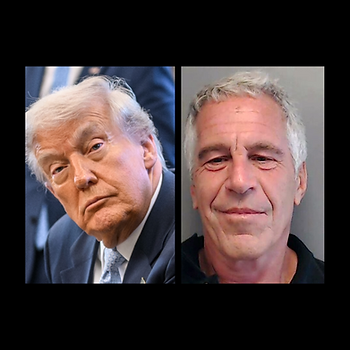
It is a crime to rape children. It is a crime to act as a co-conspirator in a network of people that rape children. And it is a crime to obstruct justice when survivors of child rape are seeking to hold their abusers accountable. In the United States, criminals can be indicted - even if the criminal is the President.
Contrary to the messaging of the President and his AI-generated propaganda campaigns, Donald Trump is not the King of America. The Supreme Court didn’t grant him absolute immunity. In fact, they took away the absolute immunity that was granted to a sitting President by the Nixon Administration in the wake of Watergate. Today, Americans enjoy more leverage against a criminal President than they have had in over 50 years. In the Trump v United States (2024) ruling, Roberts writes:
…for a President’s unofficial acts, there is no immunity. The principles we set out in Clinton v. Jones confirm as much. When Paula Jones brought a civil lawsuit against then President Bill Clinton for acts he allegedly committed prior to his Presidency, we rejected his argument that he enjoyed temporary immunity from the lawsuit while serving as President. 520 U.S., at 684. Although Presidential immunity is required for official actions to ensure that the President’s decision making is not distorted by the threat of future litigation stemming from those actions, that concern does not support immunity for unofficial conduct.
Raping children does not fall within the scope of the President’s official conduct. Neither does obstructing justice as a co-conspirator adjacent to, if not directly involved with, a network of high-powered pedophiles.
SCOTUS outlines a number of contexts in which the President can be indicted in their Trump (2024). A sitting President holds no immunity for crimes he committed before he took office, for example. He can be freely indicted for crimes committed in between terms, in a private capacity, as a candidate, or as the leader of the Republican Party. Additionally, he is not protected by immunity for crimes committed outside his official capacity as President. The bar is high, but not insurmountable. Finally, in a devastating blow to Executive Branch self-oversight, SCOTUS extended the authority to indict the President to District Attorneys and State Attorneys General. The President’s hand-picked Attorney General no longer holds a monopoly on Presidential indictments.
So, why hasn’t Trump been held accountable, yet?
We have been so inundated with misinformation and shaken by SCOTUS’s refusal to immediately convict Trump, we failed to read the fine print. Worse, we completely ceded the legal battleground to the Trump Administration in our despair. Despite his enthusiastic vigor for committing the highest of crimes and misdemeanors, there are currently 0 prosecutors seeking indictments against The President.
If we course correct, we can see that since the ruling, the nation has had the ability to launch waves of indictments against the President. We were just convinced to stand still.
On the surface it’s easy to believe that the Supreme Court bent the knee and coronated a new king with their Presidential immunity ruling. Below the surface, the Roberts Court has been deploying a strategy to usurp power from the Executive Branch and reallocate it for the Judicial Branch. Less than two weeks before the Trump (2024) ruling, SCOTUS issued two back to back rulings that caused a tangible shift in the balance of power between the two Branches.
First, in Securities and Exchange Commission v Jarkesy (2024), the court ruled against the Securities and Exchange Commission’s use of its own internal judges (Executive Branch) instead of Article III judges (Judicial Branch) in certain fraud claims. The following day, in the case of Loper Bright Enterprises et al v Raimondo, Secretary of Commerce, et al (2024), SCOTUS ruled that the Chevron Doctrine, which required the federal courts to defer to regulatory agencies’ interpretations of incomplete or ambiguous legislation, violated the Administrative Procedures Act.
Taking power away from the Executive Branch and returning it once again to the Judicial Branch, SCOTUS held:
The Administrative Procedure Act requires courts to exercise their independent judgment in deciding whether an agency has acted within its statutory authority, and courts may not defer to an agency interpretation of the law simply because a statute is ambiguous; Chevron is overruled.
The Trump v United States (2024) ruling follows the same pattern. Far from granting Trump the authority of a king, the ruling actually dramatically restricts Executive Branch authority and expands the Judicial Branch’s ability to check the President and his Branch’s officials.
Through the Trump (2024) ruling, the Supreme Court strategically ends the Department of Justice’s ability to shield the President from indictment. It also removes the absolute immunity that was granted to the President when the Nixon Administration invented Presidential immunity to protect the President and the Republican Party from prosecution for the Watergate Scandal.
SCOTUS replaces the DOJ policy granting the President absolute immunity with a tiered system of immunity that leaves ample room for indictment. Finally, SCOTUS prescribes new guidelines that direct prosecutors to bring their cases up through the lower courts to appropriately categorize acts as official or unofficial before proceeding.
This brings us to why neither Jack Smith nor Fani Willis were able to secure convictions, and why despite being convicted of 34 felonies through the work of Alvin Bragg, Donald Trump still walks free.
DA Alvin Braggs hush money case was allowed to proceed because the crimes were clearly committed before Trump was President and were, therefore, categorized as unofficial acts. Bragg easily secured a conviction, but he opted to request an unconditional discharge, which requires no prison time. This was the most effective way to ensure the conviction didn’t fall on appeal.
The acts criminalized in Jack Smith’s case were less cut and dry. Some were unofficial. Some were official. Some rested in the grey area. SCOTUS sent Smith back to the lower court to categorize them according to the newly established guidelines and cement the DOJ’s submissive standing in relation to the Court.
In other words, SCOTUS remanded Smiths cases because it wanted the Executive Branch to bend the knee to the Judicial Branch, not because it has a particular affinity for Donald Trump. Once the Trump Administration took office, though, Smith made the decision to request a dismissal without prejudice to prevent the case from being dismantled by Trump’s DOJ. It was not dismissed because of the Trump (2024) ruling.
District Attorney Fani Willis arguably had the strongest case against Trump. She had already secured four guilty pleas from the President’s co-conspirators when the Republicans had her successfully removed from the case. Her case was also allowed to proceed, but when the time came to find another prosecutor to fill her shoes, not one showed enough the courage to step up and hold the President accountable. As a result, the acting prosecutor filed for a dismissal. The case was not dismissed because SCOTUS ruled that Trump is immune. We were just subjected to a constant stream of disinformation designed to make up believe he is.
It’s a difficult pill to swallow, but Trump has been indictable for every crime he has committed before he took office, between terms, and outside the boundaries of his official duties since July of 2024. Whether through fear or misunderstanding, prosecutors have not responded to the call to protect the nation and its people.
District Attorneys and State Attorneys general have the authority to indict the current sitting President for his criminal acts and his efforts to obstruct them. SCOTUS has shown they are willing to convict if prosecutors follow the proper guidelines. The nation does not have to wait for the Attorney General to take action.
Concerned individuals and groups in any locality or state where Trump and his co-conspirators have violated the law have the right to demand that their District Attorneys and Attorneys General launch investigations, summon a grand jury and do the work needed to indict the President.
As new reporting from the Strategic Institute on Intersectional Policy and Practice (SIIPP) details, “According to the Supreme Court’s new guidelines, the President holds no immunity for criminal activity he may have committed in the back rooms of Mar-a-Lago or on Epstein Island before he became President. He has no immunity from indictment for crimes he committed while Joe Biden was President. Trump holds no immunity for crimes he committed in a private capacity as a business owner. And he likely holds no immunity for defrauding the People into believing he is a king so that he could go on to obstruct justice, engage in seditious conspiracy, and serve as the ringleader of a criminal racketeering entity operating under the cover of the Republican Party.”
The District Attorney of Palm Beach, Alexcia Cox could begin the legal efforts to hold Trump accountable for his role in obstructing justice being sought for the victims of Epstein and his co-conspirators immediately. DA Mary Moriarty could prosecute Trump, former Attorney General Pam Bondi (who is currently a private citizen that holds no immunity whatsoever), and Kristi Noem for the crimes they have committed during their ICE raids, including the murder of Renee Goode and Alex Pretti and the subsequent obstruction of justice that followed. Palm Beach County State Attorney Alexcia Cox and New York County District Attorney Alvin Bragg could pursue prosecutions in Florida and New York for the Logan Act violations he committed between terms working without adversaries as a shadow government. The list is grotesquely endless. Potentially, though, just one conviction could end the Trump presidency.
As we proceed with legal analysis and discussions on responses to the actions of the Trump Presidency, opinions and assertions would benefit from a proper reading of the Trump (2024) ruling. A sitting President can be criminally indicted, tried, and sentenced. They can be brought to court by a District Attorney or State Attorney General. And Donald Trump is no exception.


Comments